

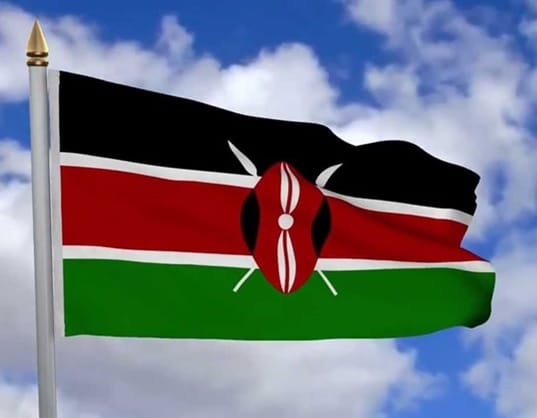


Download the Notes Free
Kenya Notes
These notes follow the Kenya Syllabus. The notes have been prepared by qualified professional teachers.
Click the links below to download the Notes:
KENYA SECONDARY EDUCATION
Overview of Kenya Secondary Education
Kenya’s
secondary education system is overseen by the Ministry of Education, Science
and Technology. The system is designed to provide students with a comprehensive
education that prepares them for higher education or the workforce.
Education System Structure
Kenya’s
secondary education system is divided into four years of lower secondary
education and two years of upper secondary education. Lower secondary education
is compulsory and is designed to provide students with a broad foundation in
academic subjects, including mathematics, science, social studies, and
languages.
After
completing lower secondary education, students can choose to pursue upper
secondary education in one of three tracks: academic, technical, or vocational.
The academic track is designed for students who plan to pursue higher
education, while the technical and vocational tracks are designed to prepare
students for entry into the workforce.
Key Education Policies
Kenya’s
education policies are designed to ensure that all students have access to
quality education. The government has implemented several policies to improve
the quality of education in the country, including the Free Primary Education
Policy and the Free Day Secondary Education Policy.
The
Free Primary Education Policy, which was implemented in 2003, has increased enrolment
in primary schools and has helped to reduce the number of out-of-school
children. The Free Day Secondary Education Policy, which was implemented in
2008, has also increased access to secondary education for students from
low-income families.
In
addition to these policies, the government has also implemented several reforms
aimed at improving the quality of education in the country. These reforms
include the introduction of a new curriculum, the development of new textbooks,
and the implementation of teacher training programs.
Curriculum and Subjects
Kenya’s
secondary education system is designed to provide students with a broad-based
education that prepares them for further studies or the workforce. The
curriculum is divided into two levels: junior secondary and senior secondary.
Junior secondary education lasts for three years while senior secondary
education lasts for four years.
Core Subjects
The
core subjects in Kenya’s secondary education curriculum are English, Kiswahili,
mathematics, biology, chemistry, physics, and geography. These subjects are
compulsory for all students and are examined at the end of the four-year senior
secondary education.
Elective Courses
In
addition to the core subjects, students are also required to choose three
elective courses from a list of over 20 subjects. The elective courses include
history, religious education, business studies, computer studies, agriculture,
and music among others. The choice of elective courses is determined by the
student’s interests and career aspirations.
Examination and Assessment
At the
end of the four-year senior secondary education, students sit for the Kenya
Certificate of Secondary Education (KCSE) examination. The KCSE examination is
a national examination that assesses students’ knowledge and skills in the core
subjects and elective courses. The examination is marked externally by the
Kenya National Examinations Council (KNEC) and the results are used to
determine students’ eligibility for university admission.
In conclusion,
Kenya’s secondary education curriculum is designed to provide students with a
broad-based education that prepares them for further studies or the workforce.
The core subjects and elective courses offer students a wide range of options
to choose from based on their interests and career aspirations. The KCSE
examination is a rigorous assessment that ensures that students are
well-prepared for the next phase of their education or career.